1. Find a Stable Posture
In zazen you take a stable sitting posture: on a zafu (traditional round cushion for lotus position), a seiza bench (kneeling position) or on a chair. The back is upright but not rigid, the hands rest in the lap, and the gaze is soft and directed downward, about one meter in front of you. Find your own steady foundation. Below are the common postures used in zazen.
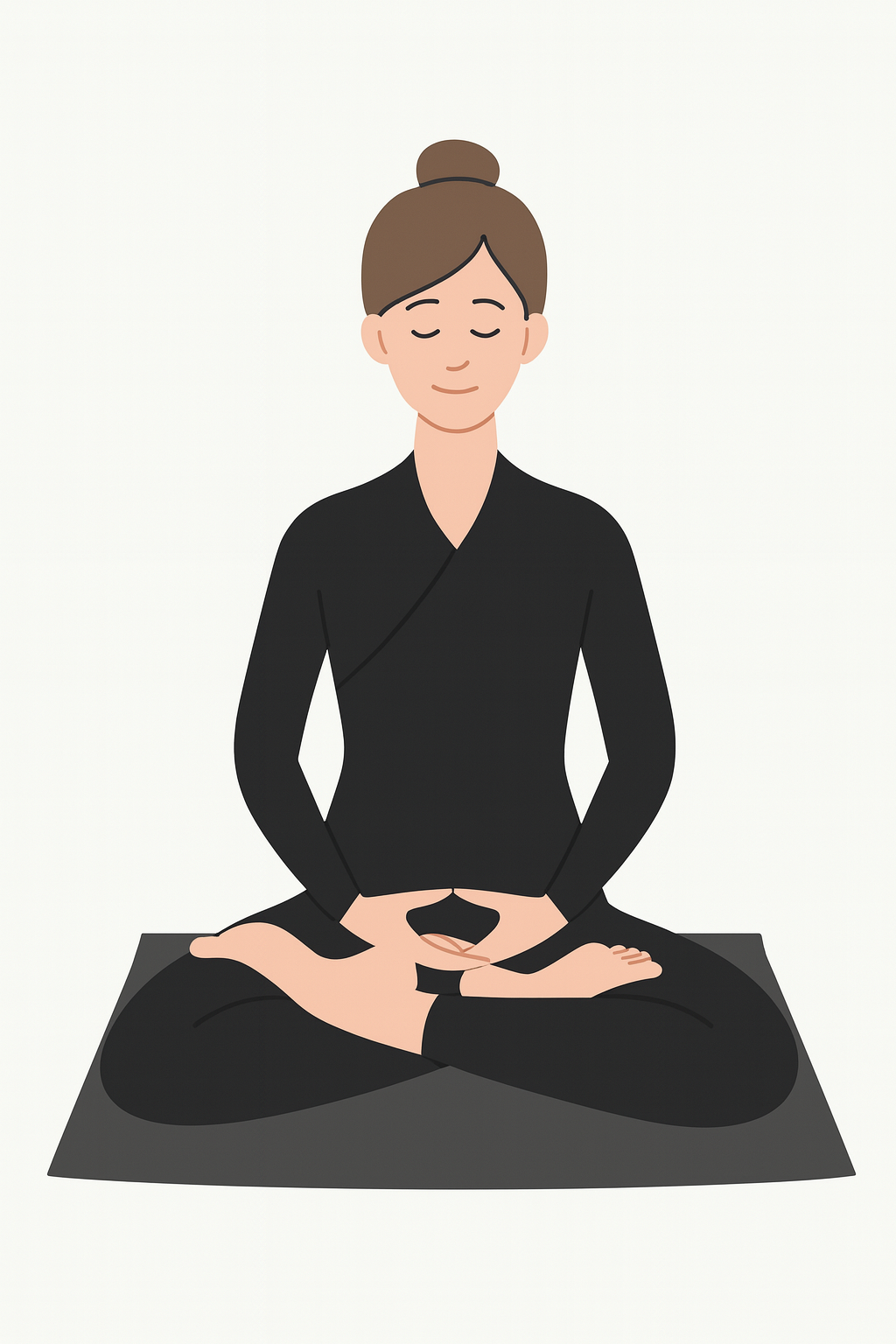
Full Lotus
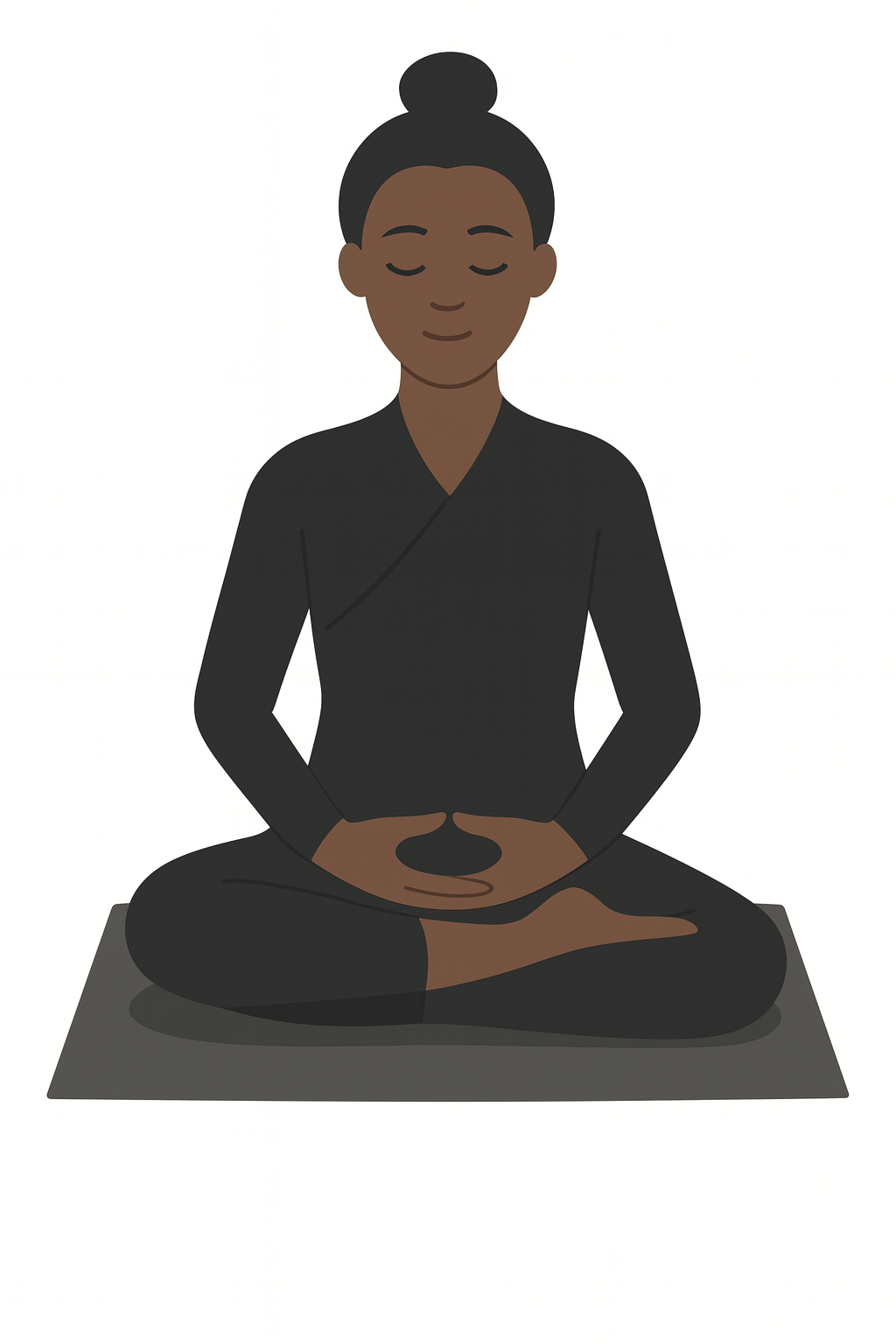
Half Lotus
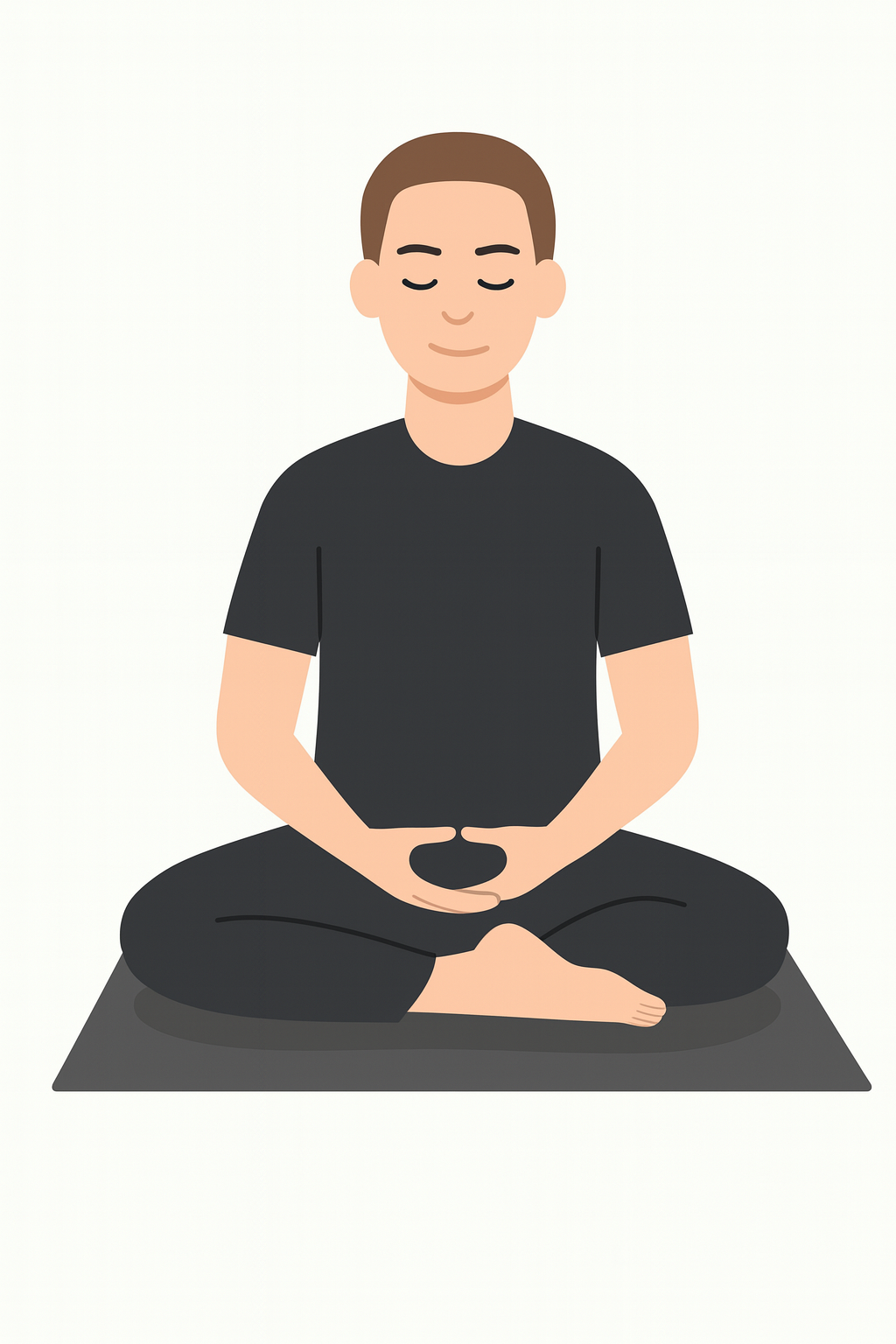
Burmese
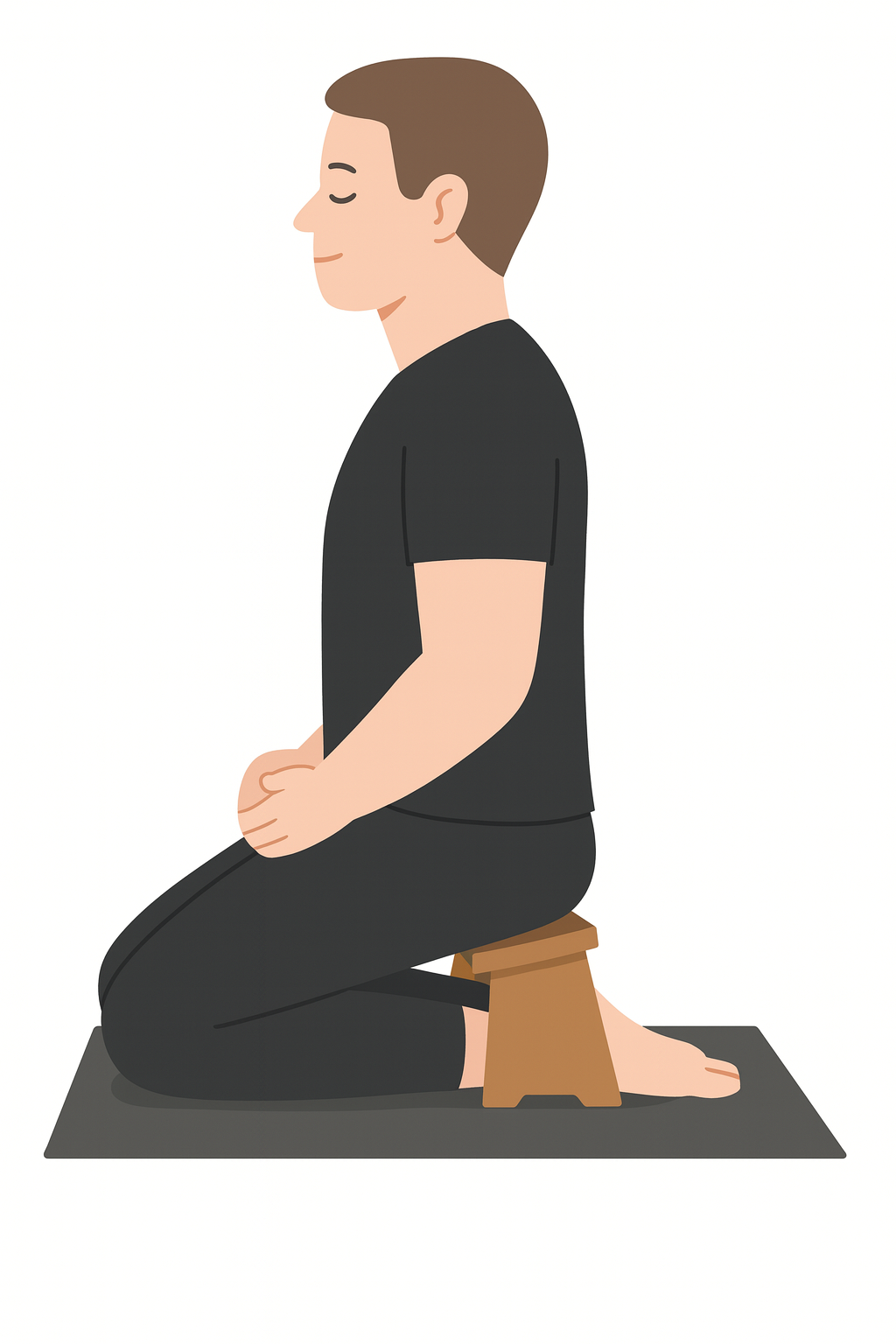
Seiza Bench
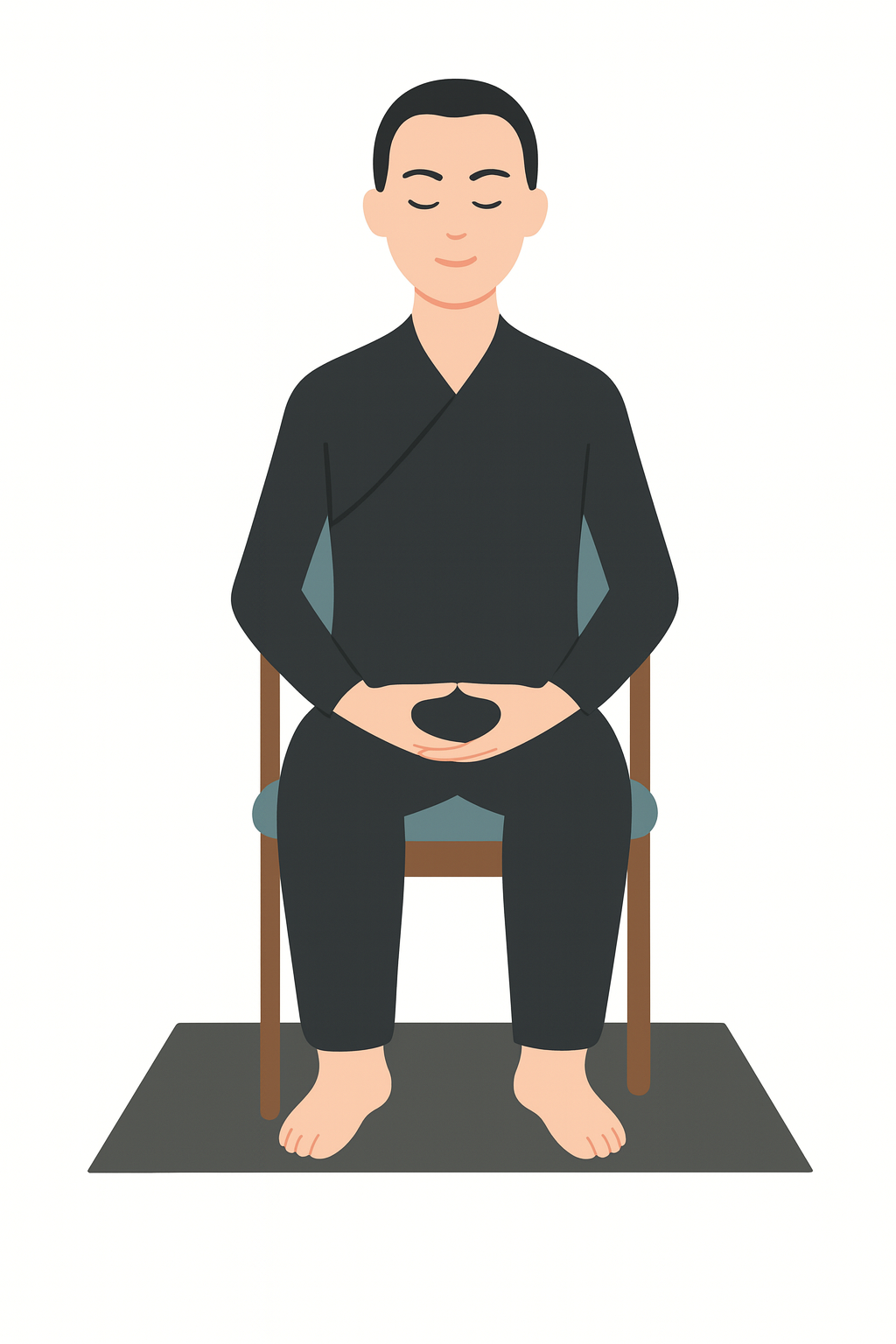
Chair
2. Hands Resting in the Mudra

The hands rest in the cosmic mudra (hōkai jōin in Japanese). Your dominant hand lies underneath, palm facing up, gently supporting the other hand, also palm up, so that the knuckles overlap. If you’re right‑handed, the right hand supports the left; if you’re left‑handed, the left supports the right. The thumbs meet lightly, forming a soft oval shape.
This oval is not held stiffly. It has a quiet, living quality, as if you were holding something precious yet weightless. The mudra naturally gathers your attention in the center of the body, helping the breath settle and the mind become steady. When sitting in full lotus, the mudra can rest comfortably on the upturned soles of your feet, but it can just as easily rest in your lap when seated on a bench or chair.
3. Your Breath is Your Anchor
The breath is a natural anchor. You don’t need to deepen it, slow it down, or shape it in any way. Simply notice how inhalation and exhalation follow one another. Some practitioners count their breaths from one to ten to support focus, but this is optional.
Whenever you notice you’ve been distracted — by thoughts, sounds, sensations, or emotions — gently return to posture and breath. This returning is not a failure; it is the essence of the practice. Each return strengthens clarity, patience, and kindness toward your own mind. Over time, the breath becomes a steady companion, something you can trust to bring you back to the present moment.
4. Rest in the Stream of Reality
Once seated with attention, you let go of your ideas about zazen, the body, and concepts like nose, mouth, throat, and pain. Zazen is resting in the stream of reality itself. Thoughts, sensations, and sounds arise and pass, but you don’t need to follow them or push them away.
Gradually, the sense of “I” doing the sitting softens. The boundaries between sitter, breath, and moment become less fixed. There is only the sitting, not the sitter. This is not something you force — it reveals itself naturally when you stop trying to control the experience.
In this openness, you begin to experience life directly, without the usual filters of judgment or expectation. This is the heart of Zen practice: meeting reality as it is, moment by moment.
5. Bow in Gassho and Rise Slowly
When you finish zazen, bow in gassho. Bring your palms together in front of the heart, fingers pointing upward, and bow gently. Then rest your hands, palms up, on your thighs and slowly unfold your legs. If you want to see a clear demonstration of gasshō, you can watch this short video .
If your legs have fallen asleep, give them a light shake or tap your feet on the floor a few times. Rise slowly and calmly. The transition from sitting to standing is part of the practice. A way of carrying the same presence into movement.
6. Be Consistent
Regular practice is more important than long sessions. Sitting twice a day for ten minutes can be more transformative than an occasional hour-long meditation. Consistency allows the effects of zazen to settle into your daily life, like water slowly clearing as the sediment sinks.
7. Be Patient
Don’t get discouraged if you find it difficult at first. Some days feel calm, others restless, both are part of the path. Zazen is a practice that unfolds over time, revealing its depth gradually. What matters is simply returning, again and again, with sincerity.